While Retail Media Networks (RMNs) started online, the major growth point in South Africa is moving back to physical store environments. This is where shoppers make their final buying decisions. This shift marks a clear change in how brands talk to shoppers at the point of purchase. It changes traditional brick-and-mortar stores into data-driven advertising platforms that deliver clear results and better customer engagement.
Moving retail media from online apps into the physical store fits how South Africans actually shop. In international markets, e-commerce holds a large share of the market. In South Africa, shoppers still prefer in-person shopping for fast-moving consumer goods (FMCG) and daily essentials. This layout gives brands a direct way to use media networks inside physical stores. It reaches shoppers when they are ready to buy. Adding digital display technology to physical stores gives brands precise targeting tools while keeping the real-world shopping experience intact.
The POPIA and Privacy Advantage
South Africa’s Protection of Personal Information Act (POPIA) creates a strict privacy framework. This makes in-store retail media networks a useful tool for compliant, legal advertising. As third-party cookies phase out globally and privacy concerns grow, POPIA-compliant advertising is now a necessity. Local retailers have built secure first-party data systems through their customer loyalty programmes. These systems provide deep shopper insights while following local privacy laws. These programmes are no longer just for collecting points; they act as data platforms that guide live advertising choices:
- Checkers Xtra Savings: Features over 29 million registered members, offering a massive pool of localised transaction data.
- Clicks ClubCard: Tracks consistent shopper habits across the health, beauty, and wellness sectors.
- Pick n Pay Smart Shopper: Gathers direct household spending patterns on daily grocery items.
This strategy works because it uses a clear consent model. Shoppers share their till data to get direct discounts and rewards. This first-party data allows retailers to show targeted adverts on digital smart screens, point-of-sale displays, and mobile screens while customers walk the store floor. This data is more accurate than old third-party web cookies because it tracks actual purchases, not just web browsing. Retailers can now link a screen advert directly to a till sales transaction. This provides a closed-loop measurement system that shows the exact return on advertising spend (ROAS) and Average Transaction Value (ATV).
Beyond the Digital App: The Brick-and-Mortar Reality
Major local networks are turning physical store layouts into advertising channels. These platforms show that retail media is not just an online tool. These screens show adverts based on the shopper’s location in the store, the time of day, and current stock levels.
Instead of playing static content on a basic, unmanaged loop, modern in-store networks let brands reach customers at distinct zones along the shopper journey:
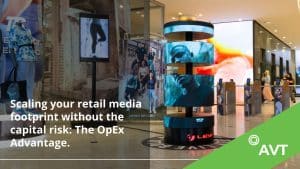
- Storefront and Windows: Large video walls and high-brightness entrance screens grab foot traffic from busy mall walkways to draw shoppers inside.
- The Entrance Zone: Digital kiosks and promotional displays guide the shopper’s initial choices and direct them toward featured campaigns.
- Aisles and End-Caps: Digital promo boards and shelf-edge displays show targeted adverts where the final product choice happens.
- The Checkout Zone: Integrated till screens and queue management displays use shopper dwell time to show last-minute offers right before the loyalty card swipe.
This physical setup holds an advantage over online marketplaces like Takealot for everyday goods. While local e-commerce is growing in apparel and electronics, grocery and daily essentials still live in brick-and-mortar stores. In-store digital signage influences immediate actions through promotions and product messages that adjust to real-time store conditions. Retailers use omnichannel marketing strategies to connect digital and physical touchpoints. This structure keeps brand messaging uniform across all channels.
The Expansion Frontier: Corporate and Independent Retail Groups
While large tier-one grocery chains are the most visible adopters of retail media networks, a massive opportunity is emerging within tier-two corporate franchises and independent retail buying groups across South Africa. These regional supermarket chains, specialised liquor outlets, and wholesale cash-and-carries serve millions of diverse consumers daily, offering an expansive footprint outside of standard shopping malls. By adopting modern digital signage networks, these independent groups are transforming from simple supply-chain businesses into high-yield local advertising networks.
Deploying digital signage and retail media networks across varied corporate layouts requires resilient hardware and flexible software architectures tailored to multi-site operations:
- High-Reliability Hardware Arrays: Utilising commercial-grade displays with industrial power supplies designed to withstand voltage fluctuations and heavy 24/7 operating cycles.
- Edge-Based Media Players: Storing video assets and playback schedules locally on the hardware so advertising playlists loop seamlessly without putting heavy demands on local network bandwidth.
- Scalable Multi-Tenant Cloud CMS: Enabling central marketing teams to push national brand campaigns down to thousands of endpoints while letting individual store managers control localised pricing updates.
Brands are finding that shoppers in regional and independent retail environments exhibit high brand loyalty and highly consistent basket profiles. This predictability makes localised digital displays exceptionally effective for targeted trade promotions. The playback logs and proof-of-performance data generated from these digital networks give FMCG brands clear insights into regional buying habits, helping teams build precise, location-specific marketing plans. As regional retail groups continue to update their point-of-sale infrastructure, the capacity for in-store media will scale rapidly, opening up high-margin ad revenue streams for retailers and providing brands with direct, measurable access to highly targeted consumer segments.
How AVT Delivers the In-Store Retail Media Solution
Building an effective retail media network requires more than just mounting standard TV screens on a wall. It requires an experienced audio-visual system integrator who can connect hardware, media player software, and retail store data into a single, reliable system. AVT provides the complete, turnkey solution to implement and manage in-store retail media networks across South Africa.
With over 20 years of experience as a trusted technology partner for top local retail groups, AVT manages the entire system lifecycle:
- System Design & Hardware Deployment: Selecting and installing commercial-grade LCDs, high-impact video walls, interactive digital kiosks, and specialised audio systems built for 24/7 retail use.
- Content Management Systems (CMS): Setting up and supporting cloud-based CMS platforms that allow retailers to manage, schedule, and update media playlists across multi-site store rollouts.
- Data Integration & Analytical Software: Connecting digital displays with point-of-sale (POS) data, inventory systems, and audience measurement technology to track shopper dwell time, age, and gender metrics cleanly.
- Managed In-Store Radio Networks: Pairing digital signage with fully licensed in-store music and audio adverts to create an immersive, multi-sensory shopping environment.
- Turnkey Support & Maintenance: Providing ongoing technical assistance, system monitoring, and on-site field support across South Africa and Sub-Saharan Africa to ensure zero screen downtime.
We handle the practical technical setup, including data cabling, secure bracket mounting, rack planning, and network configuration. This lets retailers focus on ad sales while we ensure the network operates smoothly.
The Strategic Imperative for Modern Marketers
Retail media networks in South Africa are now a standard part of a complete omnichannel marketing plan. They drive immediate sales and protect brand share. The combination of strict privacy rules, better display tech, and changing habits makes traditional print and broadcast media less effective. Retail media gives brands a measurable, accountable alternative that proves its worth at the till point. Forward-thinking brands are shifting budgets here because in-store screens offer a clear return on investment.
The time for small tests is over. Successful brands are now making long-term budget commitments to in-store digital signage networks. This shift means media planners and brand managers must understand media scheduling, playback reporting, and store data tracking. Brands that secure premium screen placements early will gain a head start as these networks grow.
The future belongs to brands that keep their messaging uniform across every touchpoint, guiding the customer from initial window displays right through to the checkout queue. In-store retail media networks give you the exact measurement tools and tracking data needed to constantly refine these campaigns. Brands and media buyers should review their current ad spend and see how digital signage networks can improve sales performance while providing the clear campaign reporting that modern business demands.
Frequently Asked Questions
What are Retail Media Networks and how do they work in South African stores?
Retail Media Networks are advertising platforms run by retailers that let brands promote items directly to shoppers inside the store environment. In physical South African stores, these networks use professional digital signage screens, point-of-sale displays, and managed audio systems to show adverts to customers while they walk the aisles. These systems use first-party data from loyalty cards to show relevant promotions, catching the shopper at the exact moment they are deciding what to buy.
How does POPIA compliance benefit retail media advertising in South Africa?
POPIA compliance builds trust because data usage is transparent. Unlike web tracking cookies that follow users without permission, retail media networks use first-party data that customers share willingly when signing up for loyalty cards. This keeps data collection lawful, safe, and highly accurate, as it records real buying transactions rather than random web searches.
Why are physical stores more important than online platforms for retail media in South Africa?
Physical stores are where the vast majority of South African grocery and daily essential transactions take place. While e-commerce is growing, local shoppers still prefer buying their daily goods in person. In-store screens let brands talk to consumers at the shelf edge, helping to increase the Average Transaction Value (ATV) in a way online banners cannot match.
How can retail media networks reach consumers in South Africa's informal retail sector?
Networks reach the informal sector using specialised hardware and software built for independent shops. This includes solar-powered digital displays that handle loadshedding, offline-capable media players that loop content without needing a continuous internet connection, and central cloud-based CMS software to push updates out remotely.
What should retail brands consider when deploying digital signage networks?
Retailers must treat digital signage as an integrated system, not just independent screens. It requires a proper plan for screen placement (from storefronts to checkout zones), a reliable cloud CMS for content scheduling, and a partnership with an audio-visual system integrator like AVT to handle hardware installation, network configuration, and ongoing technical support.