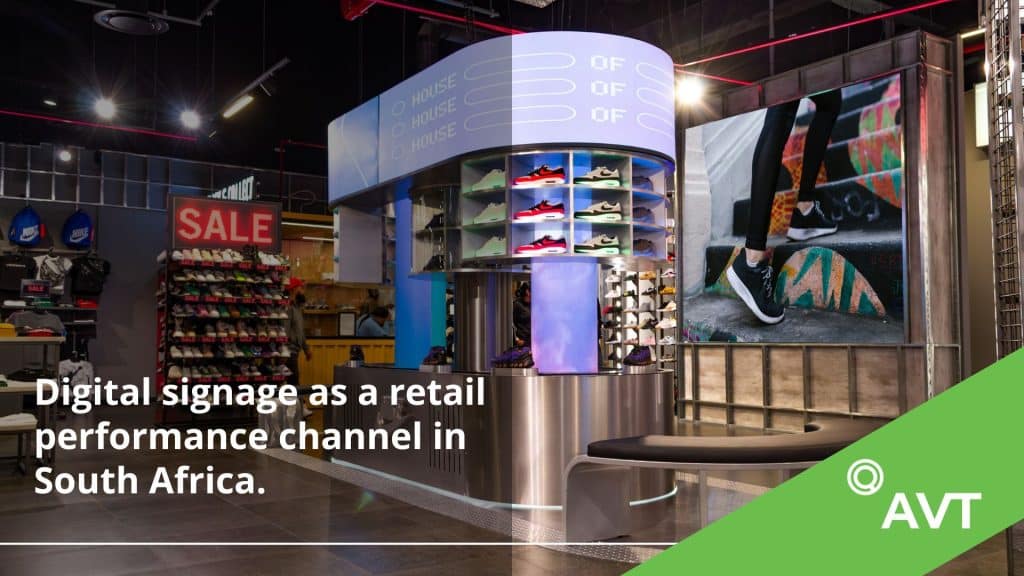
For South African retailers, the advantages are clear: digital signage offers real-time messaging updates, ensures consistency across multi-location stores, and allows for adaptive content based on stock levels, trading patterns, and external factors such as weather. In doing so, it provides a significant edge in competing against the growing dominance of online retail by maximizing the benefits of in-store media to give customers a reason to stop, engage, and explore.
The Three Primary Roles of Digital Screens in Retail
Capturing Attention in High-Traffic Zones
Digital signage has the ability to cut through the visual clutter typical of busy retail environments. The combination of motion, brightness, and strategically designed content can stop passers-by in their tracks, drawing them into the store. This is particularly important in high-traffic areas such as malls or bustling high streets, where the competition for attention is fierce. Digital window signage is often the first point of contact and has been shown to increase foot traffic by up to 30%, making it a smart first investment.
Enhancing the In-Store Experience
Once inside the store, digital signage serves to reduce friction and enhance the overall shopping experience. This can manifest in various forms:
- Clear, concise promotional messaging that can be updated instantly
- Category navigation and wayfinding assistance
- Short product explainers that address common customer queries
- Storytelling that communicates the unique value proposition of a product
Advanced digital signage systems also leverage contextual data, such as time of day, store stock levels, or weather conditions, to adapt content dynamically. This data-driven approach is becoming increasingly popular as retailers seek to deliver highly personalized and relevant messaging to customers.
Delivering Measurable Impact
The true power of digital signage lies in its ability to be continuously managed, optimized, and improved through performance metrics. When strategically placed and aligned with the customer journey, digital signage enables retailers to track key performance indicators (KPIs) such as:
- Footfall increases
- Dwell time in key areas
- Conversion rates
- Sales performance of promoted items
- Average transaction value (ATV)
By analyzing these metrics, retailers can make data-driven adjustments to optimize the impact of their screens and ensure ongoing success.
Strategic Placement of Digital Screens in Retail Stores
To maximize effectiveness, digital signage must be thoughtfully positioned within the store to align with shopper intent. A zone-based planning approach helps ensure that screens are placed in the most impactful locations:
Storefront and Windows
Purpose: To drive awareness and foot traffic.
Content: Seasonal promotions, hero offers, clear pricing, new product launches.
Entrance Zone
Purpose: To guide the first in-store decisions and orientation.
Content: Best offers, store categories, loyalty program prompts.
Aisles and End-Caps
Purpose: To drive conversions where purchase decisions are made.
Content: Product feature/benefit explainers, comparisons, and bundled offers.
Queue Areas
Purpose: To leverage dwell time and encourage additional purchases.
Content: Add-ons, limited-time offers, and value-based messaging.
Checkout Zone
Purpose: To trigger last-minute purchase decisions and loyalty redemptions.
Content: Complementary products, membership reminders, impulse items.
Not all stores require the same screen placements from day one. A single well-placed screen in a strategic zone can be far more effective than a broader, unfocused rollout. The key is to prioritize placements that align with shopper behavior and business goals.
Case Study: A Practical Digital Signage Rollout in South Africa
Consider a national fashion retailer launching a summer capsule collection across multiple locations. A strategic, data-driven approach could look like this:
- Storefront: A high-brightness window screen featuring the collection with a direct call-to-action (CTA) to encourage foot traffic.
- Entrance Zone: Screens displaying key items and highlighting a rotating weekly bundle offer.
- In-Store: End-cap screens showcasing specific categories with styling suggestions and price-led offers.
- Queue Areas: Screens promoting complementary accessories based on current purchase patterns.
Performance is tracked weekly through key metrics such as footfall, conversion rate, promoted item lift, and average transaction value. Creative is refined based on the data to continually optimize performance.
Key Metrics to Measure ROI
To ensure the success of digital signage initiatives, retailers must focus on clear, actionable metrics:
- Footfall Uplift: Tracking the number of customers entering the store after storefront content updates.
- Dwell Time: Measuring how long customers engage with key in-store zones.
- Conversion Rate: The proportion of shoppers making purchases.
- Promoted Item Lift: Sales performance of highlighted products.
- Average Transaction Value (ATV): The increase in average spend when specific content is displayed.
Continuous measurement and iteration are crucial. Digital signage should evolve based on data and performance, not simply aesthetic appeal.
Best Practices for Content in Retail Digital Signage
Effective content is central to the success of digital signage. Retail screens perform best when the content is tailored to real shopper behavior and optimized for fast decision-making. Best practices include:
- Concise Messaging: Short, clear messages that can be read quickly.
- Strong Visuals: High-quality product imagery that captures attention.
- One Action per Screen: Each screen should prompt a single, clear action—such as shop, discover, save, or join.
- Pricing and Value Cues: Highlighting deals and offers where appropriate.
- Day-Part Scheduling: Adapting content to peak trading hours and times of day
Planning content is just as important as selecting the right hardware. Even a premium screen will underperform if the messaging is outdated or unclear.
Operational Considerations for South African Retailers
Digital signage requires ongoing attention to ensure its reliability and effectiveness:
- Reliability and Support: Digital signage is not a “set-and-forget” solution. Retailers need systems that are constantly monitored, with scheduled updates and quick troubleshooting to prevent disruptions.
- Consistency Across Stores: Multi-store rollouts benefit from centrally managed content that can be tailored locally to ensure relevance while maintaining brand consistency.
- Uptime and Performance: Commercial-grade hardware, proper installation, and a robust support plan are essential to ensure screens function reliably.
How AVT Supports Retailers with Digital Signage Solutions
AVT partners with brands and retailers to design, implement, and manage comprehensive digital signage solutions. Our services cover the entire lifecycle – from initial planning to long-term performance management. Our expertise includes:
- Site Assessments and Strategy: Tailoring the screen strategy to store layout and shopper flow.
- Commercial-Grade Hardware: Supplying and installing high-quality screens, including LED video walls where appropriate.
- Content Planning: Developing content that drives fast, informed decision-making.
- Remote Content Management: Enabling efficient updates and scheduling across multiple locations.
- Ongoing Support: Ensuring continuous performance with maintenance and monitoring services.
Our holistic approach ensures that digital signage solutions are not only technically sound but also aligned with business objectives, ultimately driving measurable retail outcomes.
Conclusion
Digital signage in retail is most effective when treated as an integrated retail system, not just a collection of standalone screens. By strategically placing screens, using dynamic, data-driven content, and consistently measuring performance, retailers can unlock the full potential of digital signage to drive customer engagement and revenue growth.
For South African retailers looking to enhance the in-store experience, AVT offers a complete solution that combines strategy, technology, content management, and ongoing support to ensure digital signage delivers lasting impact and measurable results at scale.